Tuesday, February 25, 2014

In Memoriam: Harold Ramis


Of all the different genres of film to create, I believe that comedies are the hardest to create. Humor has an ethereal quality that ebbs and flows as society changes. With that said, it's an amazing accomplishment to make a comedy film that is actually able to stand the test of time. Most comedians are lucky if they can perpetuate one joke, so no one could possibly mistake Harold Ramis's career as anything but pure skill and talent. Since the mid-1970s, Ramis had an immediate impact on popular culture. He was a member of the Second City comedy improv group that featured contemporaries like John Belushi, Bill Murray, and Gilda Radnor. Moving from the stages of Chicago, to the radio with National Lampoon's Radio Hour, to the small screen with the pre-SNL sketch show SCTV, Ramis's unique combination of subversive social class commentary and blue, dorm room sensibilities could not be contained. Ramis's talents belonged on the big screen, and his first screenplay credit, National Lampoon's Animal House proved it with flying colors (or food).

Whether he was acting on screen, wielding a pen, or behind the camera, his charm permeated the movies he made. I wouldn't be surprised to still here people quoting Caddyshack 30 years from now. Every new generation will be treated to Ghostbusters. It will continue to be hard to not visualize the Griswold family's ridiculous adventures when driving in the car 8 hours to your long-awaited or dreaded destination. One of the most amazing qualities of the 4 films I've mentioned so far is their ability to make people laugh of different ages, genders, and cultures. Humor is fleeting, and audiences are fickle. When the zany humor of the 80's gave way to the cynical, snark of the 90's, Ramis was right on the cusp with the coffee-black film Groundhog Day. He even tried to transition into the current generation of comedians with the lackluster Year One, which ultimately just dreamed too big.

It's unfortunate that Ramis had to die of a disease that was so debilitating. He had to learn how to walk again but was yet again forced back into a chair. Autoimmune inflammatory vasculitis kills your blood vessels through chronic inflammation, so it slowly took away his legs. One thing that disease could never take away was his ability to laugh and to make others laugh, which are equally important in the comedy business. For an example of how amazing of a career he had, I haven't even mentioned his roles in making Meatballs, Stripes, Analyze This, and Multiplicity. Even his lesser films like Bedazzled, The Ice Harvest, and Year One have good qualities that just couldn't make an great whole. Harold Ramis, you will be missed.


Monday, February 24, 2014

Hidden Gems: Michael Mann's Thief (1981)

Since I have some newly available time on my hands, I wanted to blow the dust off of this blog because I clearly can't get enough of my own voice. My plan is to break the blog down into several columns that feature different media within the realm of my favorite topic: popular culture.

Hidden Gems is a column that highlights films featuring famous directors, writers, or actors that may have fallen to the wayside by time or by unfavorable situations. That's not to say that any of the films in this column are masterpieces. No film is perfect. What would be the fun of that? Anyways, the first film featured in this column is Michael Mann's first studio feature film Thief.


Michael Mann's influence on American film is pervasive. From the minute Miami Vice hit network airwaves in 1984, many shows and films would copy its trademark, sun-soaked sheen, and its workman-like blend of action sequences with steamy locales all bolstered by a soundtrack pulsating with some of the most popular songs of the decade. However, Michael Mann really developed much of his signature style with 1981's Thief.

Right off the bat, the movie seems defined by its simplicity. The opening robbery sequence is vividly shot with only the slightest utterance of dialogue. There is a slight tension building as the robbery progresses through its blueprint-drawn stages, which almost work with the efficiency of a Rube Goldberg device. This 5 or so minute sequence sets the tone. These men care about their business, and they only truly feel comfortable in the heat of a heist.


The film follows Frank (James Caan) as he looks for a new life that will take him away from the inherent loneliness of being a career criminal. He wants everyone else's American Dream. That yearning leads him to develop a slapdash relationship with a waitress (Tuesday Weld), and in one of the movie's most telling sequences, Frank shares with her something he hasn't ever told a woman: his past and his career, both littered with violence and emotional distance. In fact, the only two people that Frank seems to care about are Okla, his criminal mentor, played by a sad, desperate Willie Nelson, and his mentee, a fresh-looking James Belushi.

Frank's ambition for the perfect life leads him to accept a job from a new employer. He needs the money to get Okla out of jail before he dies of angina and to buy the perfect house with the white picket fence. As Frank gradually gains all the things he's always dreamed of, he finds himself in a new position: having something real to lose.

There's nothing amazingly clever about the plot in Thief. It follows a pretty standard heist movie plot line. The crew scouts a location, develops a plan, gain some rapport, and then put the plan into action. One of Michael Mann's talents is elevating standard genre narratives with breathtaking visuals and slice-of-life dialogue. Mann is notorious for doing extensive research into the lives of the characters he is portraying. This film is no different with the addition of a recently paroled thief as the film's technical adviser and on screen as one of the dirty cops ruining Frank's day. The film also features the first performance from veteran character actor Dennis Farina, who was a cop before becoming an actor. The inclusion of these men help the film seem even more realistic.


Besides James Caan's silent but deadly lead performance, the character with the most screen time is the city of Chicago. Much like Scorcese's positioning of New York as a setting that's just as alive as its citizens, Chicago teems with neon lights, seedy alleyways, and looming skyscrapers. One scene in particular on the rooftop of one of the aforementioned skyscrapers is particularly reminiscent of the opening heist sequence in Christopher Nolan's The Dark Knight, for which he has credited Mann as an influence. As events turn bad, Chicago reflects this transition. Neon lights get eclipsed by flames and smoke. The grit of the city gets washed away by the sterile suburbs, the setting of the film's finale.

Fans of Nicolas Winding Refn's Drive will find a spiritual brother in this film. Many of the sequences show instead of tell, and tension always seems to boil a little hotter when no one's speaking. Viewers looking for romance, wittiness, or elaborate, effects-driven action sequences should look elsewhere. James Caan's performance is surprisingly impressive with such little dialogue. His emoting is so subtle, but he's able to express a gamut of emotions from blind optimism to utter nihilism by the film's end.

I included this film in my hidden gems segment because it seems to take a backseat to some of Mann's more recent work like Heat and Collateral, which are both awesome films. Criterion recently released the film as part of its blu-ray collection, and critics have slowly started to revisit the film, pointing to its influence on the hyper-realistic films of the early 90's like King of New York and Reservoir Dogs. I highly recommend this film for a night where you can really pay attention to all its pieces. It's not the kind of movie that reaches out and grabs you from the beginning, so I wouldn't recommend it for social showings. If anything, fans of amazing cinematography will love it.

For Fans of: Drive, The Dark Knight, Bad Lieutenant, Taxi Driver, and the French Connection

Wednesday, June 13, 2012

Underdog Rock

In a brilliant article on Pitchfork, Nitsuh Abebe compares the release of the Rock of Ages soundtrack with blog favorite Japandroids' Celebration Rock. The article poses the idea that Rock of Ages represents an era when rock and roll and pop music were symbiotic. Rock music was so epic and was the dominant sound of that period. It was important to the mainstream culture. People's voices were filtered through the distorted, rebellious sound. Unfortunately, the Rock of Ages soundtrack features those songs being butchered by the likes of Tom Cruise, Malin Akerman and Alec Baldwin. The Rock of Ages soundtrack acts as a piece of nostalgia to a period that has (let's face it) vanished.

Cut to Celebration Rock. The article points out that many of the same themes and postures are featured in both albums. Its drunk and dumb and laughingly shooting you a bird. It feels young and reckless. The weirdest thing of all: It feels foreign now. This is a rock and roll that almost seems too much, some sort of maximalism. A Frankenstein made up of pieces of Keith Moon, Richard Hell and the parts that Axl Rose had left over after plastic surgery. It also gives Japandroids credit in creating the feeling that rock and roll really means something.

Where did this change happen? When did the king lose its crown, presumably to hip-hop?

It's easy to look to the 80's. Most of the heavyweights of the blues rock blowout were either dead, too deep into new age or rocking synths. Rock had turned into Styx, REO Speedwagon and Foreigner. Power ballads became the craze of the decade, and that even creeped its head into metal, only to breed the true nadir of mainstream rock and roll: hair metal. With most of the memorable rock from that decade brewing in the underground no-wave and punk scenes or in leather clad metal bars, the mainstream was left with few choices that could break out of their niche. For every Guns and Roses, there were 5 Wingers.

In the 60s and 70s, rock and roll had an important social position. By the 80s, there wasn't much left for mainstream music to fight. Ages of excess normally produce art that follows. Sure Bruce Springsteen and the Clash are some of the exceptions to the rule, but their record sales were dwarfed by Poison and Motley Crue. Hip Hop was hungry, and rock and roll had grown fat and lame.

With one listen to any 80s Public Enemy album, the fire is apparent. This music was fighting back. The spirit that had been smoked away during the seventies had somehow found its way to the streets of New York's inner city. For the next decade, hip hop would continue to exponentially grow in popularity thanks to the feeling of danger and rebellion it gave to mainstream (ahem, white) America. That same feeling freaked parents the fuck out when it came in the form of tye dye, pot brownies and peace symbols.

Rock and roll's next stage, Grunge, didnt care about anything. That was kinda the point. While it sold many albums and created a blueprint for mainstream rock to come, the genre really stripped rock and roll of any social consciousness. It's an introverted style of music that shruggs off any notion that rock and roll could change anything. I guess there's no better way to strip a genre of its importance than to deny its existence.

You know the story now. Rock and Roll has continued to flounder throughout the late 90s into the 2000's. Occasionally a White Stripes or a Black Keys comes along and bucks the trend, but mainstream rock is now a shell off what it once was. Radio stations formatted for it are quickly turning to adding classic rock to buffer the shittiness. Nickleback is perhaps the most successful progeny of the current state of rock, but they are considered the butt of a national joke.

Of course rock music continued to mutate during this time, but all of those mutations strayed away from the bombastic flair that had come to define the rock and roll sound. Some went electronic. Some went abstract. Few wrote songs about the next girl you have sex with saving your life. Now we float in a sea of a million genres and subgenres of rock. To pin down, however, the most basic definition of rock and roll as we've known it for decades, we dont find it in the strip club of mainstream rock nor in the libraries of art rock. So when Japandroids makes me and Nitsuh feel like rock and roll, loud, screaming, drunken in the middle of the night, rock and roll is still alive, it feels foreign, but strangely innate. It feels like a passed down memory of a guitar burning past. If you concentrate, you can feel your blood alcohol rise just a bit. It's a cocktail of old emotions.

Face it. Rock and Roll is an underdog now. It claws for relevance. It craves attention. When bands like Japandroids can spark a little bit of belief in a jaded listener, a fire is sure to follow. Thanks for helping me believe that rock and roll can feel imporant and authentic again. Thanks for believing in the underdog.

Monday, June 11, 2012

Back from Bonnaroo

The rain had started to fall as Kenny Rogers belched "The Gambler" over the patchouli-scented jam of Trey Anastasio and his merry band of Vermountaineers(?). By the first day, the campgrounds already resemble a combination of post-apocalyptic stronghold circa Escape from New York and an immense trash dump. So on Sunday, the smell and sight of the numerous garbage had started to make itself known to even the highest concertgoer. I know that this introduction reads like its going to be an expose into the nastier side of Bonnaroo, but trust me, it isn't. The most interesting thing about the whole experience is how every single person that I encountered on the last day of Bonnaroo was content or even elated. This was after the music had ended, and persumably, most of the drugs.

Is it possible that Bonnaroo elicits such a happy and complete experience because we create joy in the epitome of grime, sweltering heat and bad trips?

When people tell their stories, they usually don't talk about how they threw up on the person in front of them at Snoop Dogg or how they had to miss Kings of Leon because they freaked out in a crowd. Those stories exist for almost everyone that goes, but they line the cupboard, only to be brought out if a contest of hardcore-ness breaks out. The stories you hear are always the same. It was a religious experience. It's paradise. You should have been there. YOU HAD TO BE THERE.

I want to make a case for the negative aspects of Bonnaroo. The sun that makes a home right over your skull is daunting. When it rains, everyone is happy for about ten minutes, until they realize they camped in a tent. Beers cost more than a six-pack. Using the bathroom is the roughest chore because I've constantly seen the world record broken of how much human waste can be piled up in one place. All of these factors are magnified by the fact that I am voluntarily paying to be there. But we persevere, and we thrive like Romans.

Only in the face of so much negativity can pleasure be so fulfilling and refreshing. Now I'm not saying that some of this pleasure isnt chemically enduced/enhanced, but to the temporary residents of Bonnaroo, that doesn't matter. The rush of endorphins one can get by drinking with friends and watching a great band is only amplified by the fact that only two hours ago, that person was hunched over in a chair running off of a cigarette and 2 hours of sleep. It's this drastic transition that allows for the high to take on a higher meaning. Surviving the inferno of daytime Bonnaroo presents a conflict that pushes our boundaries of comfort, so when we rise to occasion, our victory becomes memorable and in our microcosms, epic.

Most people never let the high stop. Whether they drink it away, let guitars sing it away or blast it to the moon with psychs, the negative only serve as small obstacles to a greater goal. With their power being dampened, the struggles of living outdoors merely serve as catalyst to reaching the summit of life experience.

So when everyone is smiling at the end of Bonnaroo, it's not just because we danced and tripped to the soundtracks of our lives; it's also because we survived the Everest of music festivals.

Sunday, March 11, 2012

5 Questions about the 2012 Men's NCAA Tournament

With only two days before the First Four, even the most casual sports fan will scramble to learn all the names of schools they never knew existed in any attempt to have an edge in the bracket. It doesn't matter if you've been glued to the tube ever since the ball first hit the ground at the Carrier Classic, the 63-year-old lady that works in accounting is going to whip you (and she just now learned that Duke wasn't in England). But Hey!, winners aren't afraid to lose, right? So here are 5 questions (and their answers, you lucky dog) that might be putting the full court press on your bracket picks.

1. Who are the safe picks?

Kentucky
- Most talent spread at all positions
- Number one overall seed
- Elite defense, Capable of playing at varied paces, Tallest team in NCAA

- Mostly underclassmen
- Only 7 players deep
- Tendency to disappear offensively for stretches

Syracuse
- Dominated by upperclassmen
- Zone defense can cause teams with weak shooting fits
- Strong bench with depth at all positions

- Won ugly in many Big East games
- No All-American caliber player
- Easily muscled

North Carolina
- Lots of tourney experience
- Excellent transition offense
- Best point guard/big man combo (Marshall/Zeller) in the country

- Weak against the 3
- If Harrison Barnes doesn't show, offense stagnates
- Susceptible to slow pace/half court offense

Michigan State
- Best collection of wins over the season
- Extremely physical and strong (especially in the paint)
- Draymond Green is a natural mismatch for almost any team

- Struggle to score higher than 70
- Perimeter offense can be weak
- Susceptible to foul trouble

2.Which teams are just swimming under the surface ready for attack?

Florida State
- Beat Duke and North Carolina twice
- Physical defense
- Multiple threats on the perimeter

- Lost to Harvard
- Live/Die by the 3
- Guards can be outmatched physically

Missouri
- Most efficient offense in the country
- Won Big 12 tourney
- 4 guards/1 big lineup can cause matchup hell

- Lack of Depth
- Lack of Size
- Depend on the 3

Ohio State
- Veteran team
- Jared Sullinger can dominate offensively
- Strong team defense

- Weaker shooting than last year
- Jared Sullinger can easily turn to "hero mode"
- Can be muscled in the paint

Baylor
- Immense talent in the frontcourt
- Seemed to wake up in Big 12 tournament
- Very strong starting lineup

- Inconsistant during the season
- Big men settle for jumpshots
- Trouble with quick, perimeter-oriented teams

3.Who will be this year's Butler or VCU?

Ultimately, I don't think that this year's tourney will feature a team that blows everyone out of the water. At least not a seed below 10. While these two teams are not from Power 6 conferences, they definitely have the potential to please the basketball gods.
It just so happens that these two teams played in the same conference: Mountain West. This conference was very competitive this year, getting 4 bids (the same as the SEC).

UNLV
- Beat North Carolina
- Historically strong basketball program
- 3rd in assists

- Rough last weeks of the season
- Mike Moser has to play well

New Mexico
- Drew Gordon is a beast, easily capable of 20/20 games
- 5 game win streak
- Frequently limit teams to under 60 points

- Heavily dependant on Gordon
- Lack of strong road wins
- Weak 3 point shooting

4.Oh COME ON! Humor us! Pick a cinderella!

If you're really pushing me, I'll give you two.

Although they are a Power 6 team, I think NC State could cause some havoc in the tourney. Coming in with a late season run, they barely snuck in with an 11 seed. They gave North Carolina a run for their money on Saturday, and they seem balanced on offense. Forward C.J. Leslie can really make a name for himself.

It may seem safe to pick VCU to make a run this year, since they did it last year, but their first round matchup is against a dark horse darling in Wichita State. Thats like the river in Oregon Trail, everyone wants to abandon the stagecoach. They play hectic defense that can kill teams' confidence in their offenses. Many of the players were on the team last year and won't feel like underdogs coming into this game. Wichita State is one of the most balanced teams in the tourney, so a win over that squad will put fear in the hearts of upcoming teams.

5. Who's gonna win it all?

It's very rare that the best team actually wins the championship, especially in the age of the mid-major. Combine that idea with the thrill of not making the safest pick (Kentucky) and I think Missouri will be standing during "One Shining Moment".

Project Productivity: Or How My Blog Came Back From The Beyond

In an attempt to mine some sort of use out of my journalism degree, I've decided that it's definitely for the best that I keep writing in the public sphere. Ultimately, readers decide who is a successful journalist, and to get to that point, I'm going to need plenty of obnoxious commentors and the occasional shower of glowing praise (right,right?).

So the blog will continue in the same fashion. There might be a larger sports presence, but I assure that as soon as basketball is over, this will shrink mightily.

Anyways, It's good to be back.

Drew Daniel

Monday, January 3, 2011

Top Albums of 2010

This is a personal canon. It's impossible to be fair when creating a list, even if an objectionable person existed. There is simply too much to listen to. With that being said, these albums embody both high artistic qualities and low-brow attitude.

No Order
Teen Dream - Beach House


A complete surprise to me. Utterly calming and soulful. So much sounds comes out of the members of Beach House. Recommended tracks: Zebra, Silver Soul, Used to Be

The Monitor - Titus Andronicus


One of my favorite bands tackles the metaphor of civil war as mental divergence. The intensity is still present, but its brought to an epic level. Lyrics are sharp and the music is diverse, but the general themes sweep over the entire album. Recommended Tracks: Theme from Cheers, A More Perfect Union, Four Score and Seven

Memphis- Magic Kids


Unbelievably catchy. The energy on the album is as infectious as its nostalgic melodies. The singer croons over call-and-response background shouts and whispers. A great album for the summer and for parties. Recommended Tracks: Hey Boy, Summer, Candy


My Beautiful Dark Twisted Fantasy - Kanye West


If i had to choose which album was truly the album of the year, it would be Kanye's masterpiece. This album redefines the genre with its track lengths, virtuoso production, and the leading man's pure intensity. The videos and live performances associated with the album have been amazing and breathtaking. The most important aspect of this record is that it was made by someone who is truly on top of both pop and artistic realms. Boldness is a rare quality of a platinum artist. Recommended Tracks: Monster, So Appalled, Runaway


Hippies - Harlem


The lack of polish is what reveals this album's true character, the kid in the leather jacket smoking in the bathroom during class. The song structures are simple, but their ability to drill themselves in your brain like earwigs is only enhanced by the accessible melodies. The lyrics are sharp, instant sing-a-longs that have a mean streak. This band shows chops at handling sounds from blue-eyed soul to punk. Recommended Tracks: Someday Soon, Pissed, Friendly Ghost

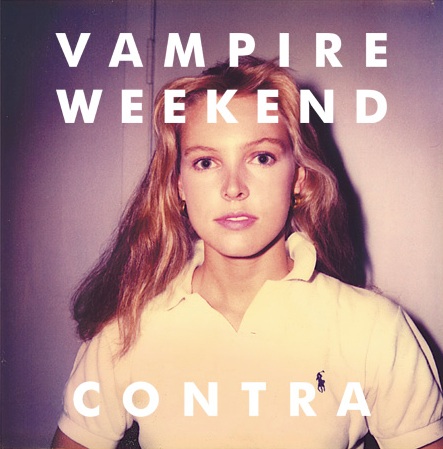
Contra - Vampire Weekend


The best pop album of the year in my mind. The band continues to expand its sound, but it still retains the sweetness and the infectious jangle of the first album. This album is darker in tone, so it plays the best in winter. Recommended Tracks: I think Ur a Contra, Cousins, Run

The Suburbs - Arcade Fire


Of all the albums on this list, I believe The Suburbs will be the one whose impact will last the longest. The album surveys the battleground of accepting adulthood. It's a tug-of-war between polaroid nostalgia and a cold digital future. It's so refreshing to hear an album equally adept at subtlety and mansion-sized dynamics. Recommended Tracks: Month of May, The Suburbs, Sprawl II

Sports - Weekend


It's a wall of noise with coils of easy-bake melodies wrapped around it. Its very punk in form, but the massive reverbs leave it sounding hollow, but wrenching. Definitely a headbanger. Recommended Tracks: End Times, Coma Summer, Age Class

Happy Birthday - Happy Birthday


It's hard to imagine a sound that combines snarling and tender tones, but Happy Birthday is able to blend them well. All of the songs have a classic feel, but they are loosely structured. They sometimes wind down a street, stepping on glam for a verse and then strutting through corner doo-wop on the chorus. Having both a male and a female singer is a plus as the songs stay interesting throughout the album. Recommended Tracks: Girls FM, Perverted Girl, 2 Shy


Number #1


Astro Coast - Surfer Blood

One of the trends that I have been following in recent rock music is the rejection of irony. In the indie camp, there seems to be a split between bands that openly endorse irony and a smaller portion of bands that have listened to Pinkerton until it got old. Without irony, Astro Coast offers a youthful look at the mild splendor of modern 20's life. From the first strike of Floating Vibes, the listener is taken to a sonic equilibrium of familiar sounds and fresh, inviting ones. Many of the melodies have a permanent suntan, the flourishes of Dick Dale and Brian Wilson. It seems to evoke the longing of living inland on a peninsula, like Florida, the band's home state.
Like the idealized surf, the night falls and turns into a bonfire on the beach. Think drunken dudes sitting around the fire with liquor bottles poking their heads out of brown paper bags. It's definitely not a beach party with Annette Funicello. Hints of the 90s radio rock they surely must have grown up filter through smoothly, but their grunge touches aren't nihilistic, mainly just lazy. Slow Jabroni and Anchorage exhibit these qualities, but unlike the songs from the 90s, both songs erupt into a quiet confidence from their life-in-quicksand beginnings.
Perhaps the confidence and resolve to be better (see Catholic Pagan) is what made this the soundtrack of my year. Whether it was the hope of new romance to be gentle and sweet (see Take it Easy), or the pure Rocky-esque anthemic inspiration that Swim (To Reach the End) offers. Connecting with musicians and their work on such elements as age, gender, and culture is so rare, and when that Big Bang of music happens for you, it's hard not to hear the reverb in your mind all year long.